June 17th, 2025, Court Leader’s Advantage Podcast Episode
Brought to You in Cooperation with the National Association for Court Management

Civil case filings per capita have been declining nationally for decades. John Greacen and Alan Carlson explained this in their book, What Is Happening to State Trial Court Civil Filings? The absolute number of civil filings in state courts has increased somewhat, however overall filings have not kept pace with population growth and have been in a long-term decline.
Meanwhile, the National Center for State Courts’ annual State of the State Courts poll reported that public trust and confidence in the state courts rose in 2024 to 63%. However, this figure has stagnated between 60% and 64% over the past four years.
These troubling numbers raise some important questions:
How are people resolving their disputes?
How are people now resolving their disputes? Are they, in fact, resolving them at all? One thing is certain: fewer and fewer people are turning to the courts, the traditional venue for peacefully settling conflict.
What can we do about this trend?
What can we do about this trend? How can we encourage the public to once again rely on America’s courts to address their issues?
This month, we explore how Arizona is tackling the challenge of Access to Justice. The state Supreme Court’s Access to Justice Committee has been working to rebuild public trust and encourage people to return to the courts as a reliable resource for resolving their disputes.
Listen to the June 17, 2025, CLA Podcast Episode on your way to or from work. 32 Minutes 35 Seconds
Watch the June 17, 2025, CLA Podcast Episode on YouTube. 35 Minutes 17 Seconds. Be sure to click on the subscribe button. It draws more attention to the topic of court administration on YouTube.
Become Part of the Conversation
Send in your comments and questions to CLAPodcast@namnet.org
Today’s Panel

Samuel A. Thumma has served as a judge on the Arizona Court of Appeals, Division One, Phoenix, Arizona, since 2012, serving as Chief Judge (2017-19) and Vice Chief Judge (2015-17). Before that, he served for five years as a trial judge (criminal and juvenile rotations) on the Arizona Superior Court in Maricopa County. Sam is a member of the National Judicial College Board of Trustees, where he serves as Secretary; is a Uniform Law Commissioner, where he serves as Secretary and as a member of the Executive Committee and is an ABA Presidential appointee on the Advisory Council of the ABA Task Force on Law and Artificial Intelligence and the Standing Committee on Lawyer Referral and Information Services.
Judge Thumma is a member of the Joint Technology Committee, appointed by the National Center for State Courts, and is an elected member of the American Law Institute, where he serves as an Advisor to the Restatement Of Law (Third) Of Torts: Remedies project. Sam chairs the Arizona Commission on Access to Justice and is a member of the Arizona Steering Committee on Artificial Intelligence and the Courts, having previously chaired various Committees, Commissions and Task Forces for the Arizona Supreme Court and the State Bar of Arizona. He co-teaches Evidence at the Arizona State University Sandra Day O’Connor College of Law. In 2023, he received the James A. Walsh Outstanding Jurist Award from the State Bar of Arizona and, in 2021, he was named the Judge of the Year by the Arizona Supreme Court. He has presented at more than 550 law-related programs and published 22 law review articles as well as more than 70 other law-related articles and book chapters. Previously, he was a partner at Perkins Coie Brown & Bain, Phoenix and associate at Arnold & Porter, Washington, D.C. Sam received a Master of Laws from Duke University School of Law in 2020; graduated Order of the Coif from the University of Iowa College of Law in 1988, where he was a Note & Comment Editor on the Iowa Law Review, and graduated from Iowa State University in 1984, where he was a Harry S. Truman Memorial Scholar and a member of Cardinal Key.
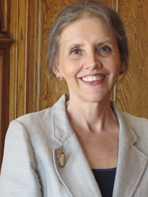
Dr. Kevin Ruegg has over twenty years working with nonprofit organizations serving those most marginalized in our society. Currently, she serves as the CEO/Executive Director for the Arizona Foundation for Legal Services and Education, Inc. In addition to her administration of nonprofit agencies, she has lent her expertise to mentoring numerous small nonprofit organizations to build their capacity; increase volunteer involvement; and create quality assurance processes.
Dr. Ruegg has been recognized for building collaborative efforts and has presented at National Conferences regarding both statewide cadres and University & Community partnership programs which she assisted in developing. Kevin has a doctoral degree in Applied Management and Decision Sciences. Her Masters is in Human Resource Development and she holds a Bachelors Degree in Business Administration with a Minor in Theology.
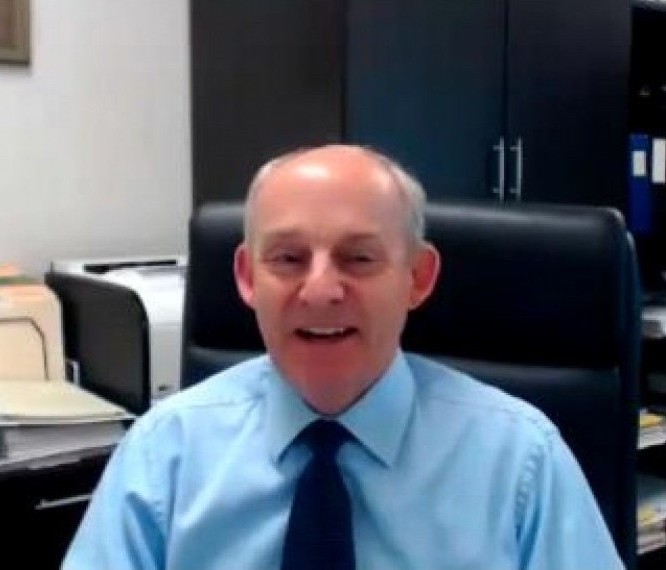
KIP ANDERSON currently serves as the Court Administrator for the Superior Court in Mohave County. He handles the administrative functions of the Court with a focus on ensuring the 11 judicial officers have the necessary support to effectively manage their daily courtroom operations. Prior to his appointment to this position in 2007, he was the Chief Deputy for the Clerk of Court for four years. He is currently a member of the Arizona Commission on Access to Justice and has served on several other Statewide Court committees.
Kip began his career in Court Administration in 1989 when he started working for the Los Angeles Municipal Court. During the 13 plus years he worked in Los Angeles he spent time in the downtown Los Angeles Traffic Division and later worked in the South Bay Court managing both the Civil and Criminal divisions. He enjoyed the various assignments throughout Los Angeles County but was ready for a change when he and his family moved to Kingman in 2003.
Mr. Anderson received his undergraduate degree from Brigham Young University and his M.P.A. from the University of Southern California. He has completed the Arizona Court Executive program.
Do You Want to Know More?
Arizona Court Help Website and the Commission’s 5-Year Goals
Bridging the Justice Gap in Legal Deserts

 Court Leader