
Next week I am delivering a talk for the Albuquerque International Association on “Demystifying and Measuring the Rule of Law Worldwide.”[i]
In an era where the term Rule of Law is frequently invoked yet often misused and misunderstood, this talk aims to demystify its meaning and global significance. Drawing on extensive experience in both U.S. courts and international judicial reform projects, Norman Meyer will explore the definition, measurement, and real-world application of the Rule of Law. Attendees will gain insights into how the Rule of Law shapes justice systems worldwide and its crucial role in fostering just and equitable societies.
What follows are some key points in my presentation.
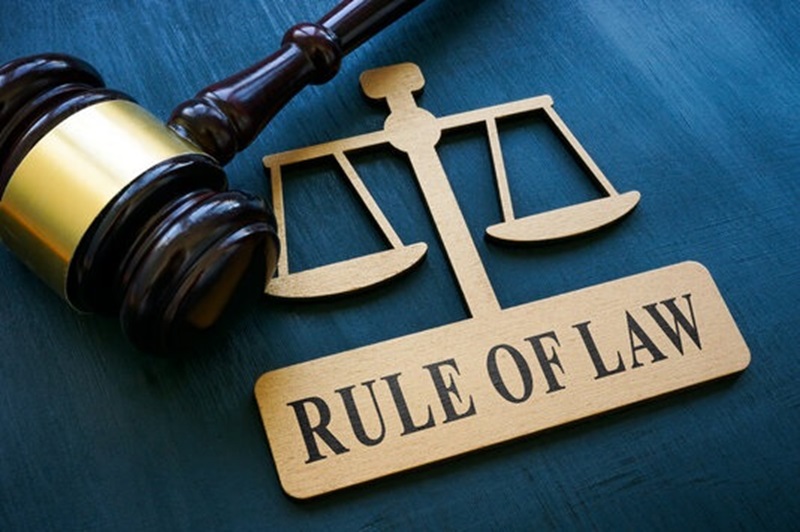
What is meant by the term “Rule of Law?” There are many sources that help define the term, and a comprehensive definition comes from the World Justice Project (WJP)[i]:
The rule of law is a durable system of laws, institutions, norms, and community commitment that delivers four universal principles:
- Accountability -The government as well as private actors are accountable under the law.
- Just Law – The law is clear, publicized, and stable and is applied evenly. It ensures human rights as well as property, contract, and procedural rights.
- Open Government -The processes by which the law is adopted, administered, adjudicated, and enforced are accessible, fair, and efficient.
- Accessible and Impartial Justice -Justice is delivered timely by competent, ethical, and independent representatives and neutrals who are accessible, have adequate resources, and reflect the makeup of the communities they serve.
But how do you know if the Rule of Law is being adhered to in countries around the world? The WJP has created a system that measures and ranks countries according to eight key factors:
| 1. Constraints on government powers 2. Absence of corruption 3. Open government 4. Fundamental rights | 5. Order and security 6. Regulatory enforcement 7. Civil justice 8. Criminal justice |
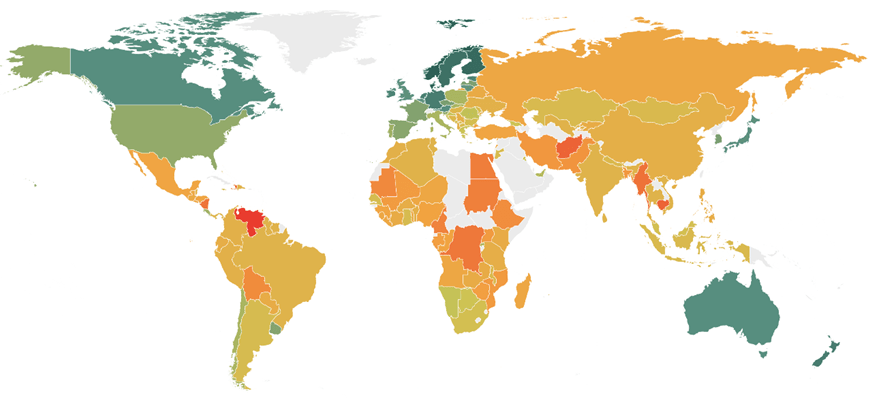
This map shows the results of the WJP’s 2024 measurements:

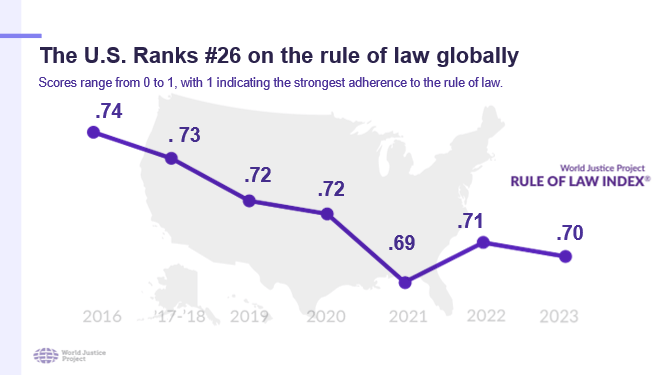
Of particular interest to me is how the United States measurements have declined over the last 8 years:
I encourage everyone to do their own research into the rule of law and what it means to the world around you. The WJP publishes complete details about its measurements and each nation’s rating on its website[i] – check out what it shows for your country, just as I did.
The WJP nicely sums up why the rule of law is so important:
No matter who we are or where we live, the rule of law affects us all. It is the foundation for communities of justice, opportunity, and peace—underpinning development, accountable government, and respect for fundamental rights. The rule of lawis critical for freedom and democracy. Research shows that the rule of law correlates to higher economic growth, greater peace, more education, and improved health outcomes.
Over the past decade there has been a decline in adherence to the Rule of Law around the world. Recent developments have continued this disturbing trend. I encourage everyone to do everything they can in their personal and professional lives to reverse this trend and promote the rule of law. Take some time to reflect on this and see what you can do in the near and long term. As you can see, much depends on all of us to do what we can.
[i] WJP Rule of Law Index | Global Insights
[i] World Justice Project | Advancing the rule of law worldwide
[i] Demystifying and Measuring the Rule of Law Worldwide | Albuquerque International Association and Center for International Studies

 Court Leader
3 thoughts on “Demystifying and Measuring the Rule of Law”