October 20th, 2026, Court Leader’s Advantage Podcast Episode 108
Brought to You in Cooperation with the National Association for Court Management


Managers are expected to take care of their employees, but who takes care of them? Two common causes of “burnout” in organizations are:
Constant Pressure to Do More With Less with increasing caseloads, hiring freezes, and budget reductions there is a constant pressure to “do more with less.
Disappearing Boundaries between Work and Personal Life Managers are increasingly expected to be available 24/7, leaving little opportunity to disconnect, recharge, or enjoy their families.
When a manager begins to struggle, the consequences can extend throughout the organization. Some managers try to manage their own burnout by quietly disengaging, what has come to be called “quiet quitting,” Others may continue working at full speed until their performance begins to visibly suffer.
This month, we examine employee burnout, specifically as it affects managers. When does burnout become a performance problem? What responsibility does an organization have to help a struggling manager? When does the responsibility shift to the manager? And what should a court executive do when a manager’s burnout begins affecting the people and work they are responsible for?
Listen to the October 20, 2026, CLA Episode on your way to or from work. 38 Minutes 3 Seconds. Be sure to share the link to this episode on your social media pages. It lets more people know about the important work of court administration in our community.
Watch the October 20, 2026, CLA Episode on YouTube, 35 Minutes 26 Seconds. Be sure to click on the subscribe button. It draws more attention to the topic of court administration on YouTube.
Become Part of the Conversation
Send in your comments and questions to CLAPodcast@namnet.org
Today’s Moderator

Erika Schmid is the Judicial Clerk Supervisor at Multnomah County Circuit Court in Portland, Oregon. She started as a legal assistant at a public defense office and began her journey at the courthouse by being a judicial clerk.
Erika was introduced to NACM very quickly upon becoming a supervisor as she attended the Minneapolis mid-year conference in 2023, just two months after she started her new position.
Today’s Panel
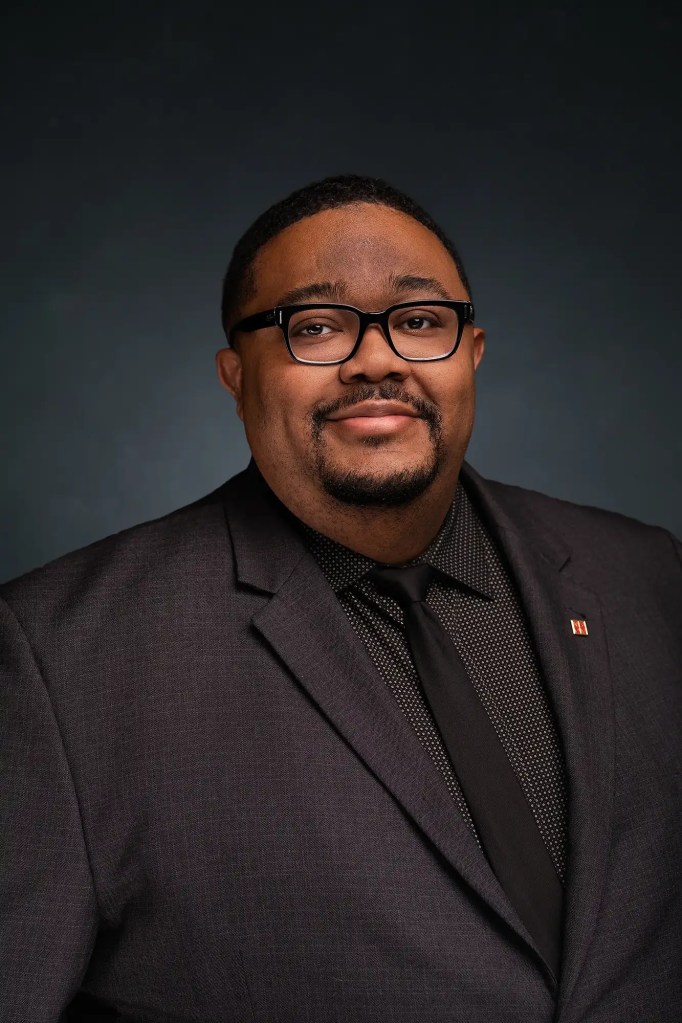
Timothy W. Ezell serves as Chief Operations Officer and Chief Deputy Clerk for the Office of the Fulton County Clerk of Superior and Magistrate Courts in Atlanta, Georgia, supporting one of Georgia’s largest and most complex court systems. He oversees human resources, information technology, policy and training, budget and procurement, Superior Court Civil, and Magistrate Court Civil operations.
Previously, Tim served as Court Administrator for the Fulton County Magistrate Court and the Fulton County Juvenile Court, where he led strategic and operational initiatives to improve court performance and public service.
Tim is the Past President of the Georgia Council of Court Administrators (GCCA) and a frequent speaker, trainer, and collaborator on court leadership, operational excellence, workforce development, and innovation. His work focuses on developing future court leaders, modernizing court operations, and strengthening public trust in the administration of justice.

Sara McDonald is the Human Resources and Development District Manager for the Sixth Judicial District of the Minnesota Judicial Branch. She has served the Minnesota Judicial Branch since 2001, holding positions from Senior Court Clerk to Interim Court Administrator, with a human resources professional focus over the past decade. Sara is currently pursuing a Master’s degree in Human Resources and Employment Relations from Penn State University.

Richard Lynch serves as the Circuit Court Administrator for the Sixth Judicial Circuit of Michigan. He began his court career in 1988 as a courtroom clerk and has subsequently moved through the ranks to serve as a law clerk/ research attorney, Chief of Court Operations, and Manager of the Civil/ Criminal Division.
Rich has also served as General Counsel for Michigan’s Third Judicial Circuit.
Having worked on the front lines and in various managerial capacities gives Rich a broad perspective of the court system, and its internal and external operational issues, through both a legal and an administrative lens. Rich looks for ways to ensure that stakeholders experience access to the court through the dedicated service of a committed workforce. Rich received the Legal Aid and Defender’s Office Ed Pokorny Pioneer of Justice Award for service to the Legal Community in 2016.
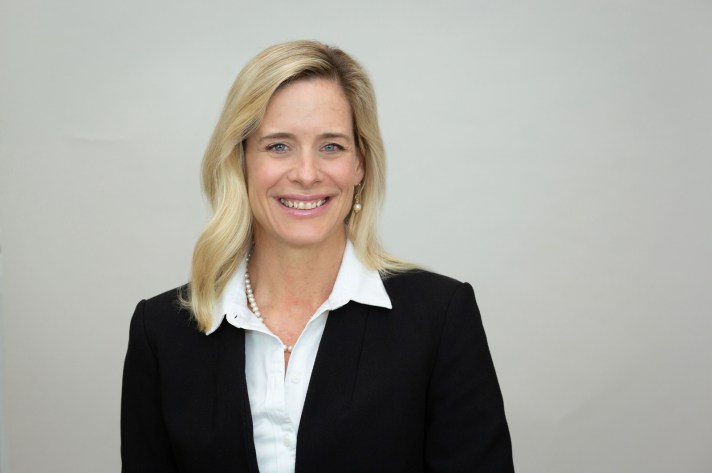
Laura Welch began her role as Court Administrator for Athens-Clarke County, Georgia in 2012 and was promoted to Assistant Human Resources Director in 2017. In 2024 she joyfully returned to her former position and currently serves six courts and fifteen judges. As liaison to the Mayor & Commission of her jurisdiction,
Laura’s job encompasses advocacy for the judicial branch, human resources and financial management, as well as administrative support to five treatment courts, misdemeanor probation, capital projects, information technology, self-represented litigants, court stenographers, bailiffs, and interpreters.Prior to becoming a court administrator, Laura worked as a local government auditor and as a consultant to the Department of Defense and the Federal Aviation Administration in Washington D.C.
Do You Want To Know More?
Manager Burnout_ Why Leaders Are Struggling in 2026


